
The brief.
Schools, parents and partner organisations all arrive at the same website wanting completely different things. The previous site tried to speak to everyone at once, which meant nobody was addressed directly and everyone had to work to find their part.
The second half of the brief was search. Education queries are specific and long, and the old site had no pages that matched the way people were actually searching.
What we did.
- Split the front door.
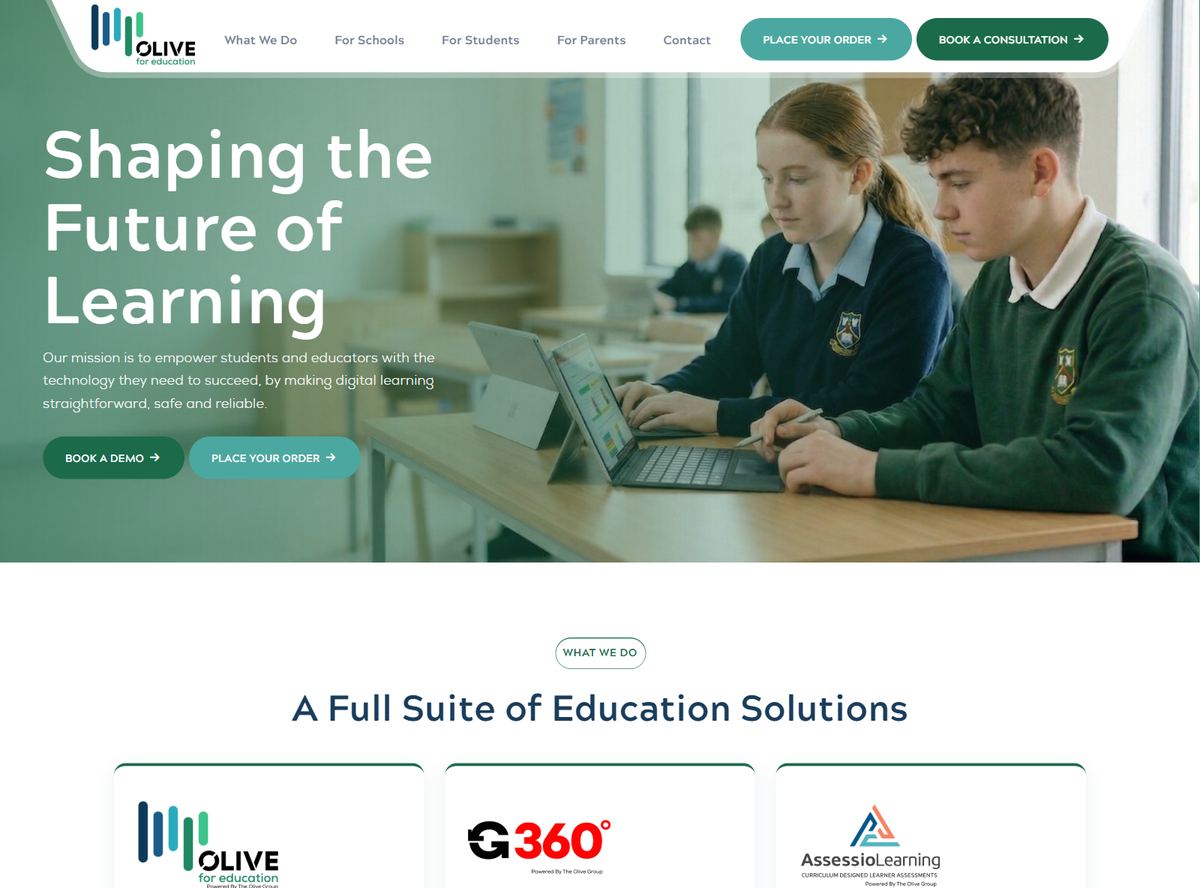
The homepage now names the three audiences and routes them within a few seconds. Everyone lands on a section written for them rather than a general page written for nobody.
- Gave every service its own page.
One page per service, per audience, written to answer the question that brings people to it. This is the least glamorous SEO work there is and it is usually the thing that moves rankings the most.
- Wrote for how people actually search.
We mapped the real queries first, then structured the pages around them, rather than writing the pages and hoping search followed.
- Made the enquiry route obvious.
Every page ends with the next step for that specific reader, not a generic contact form dropped at the bottom of the site.
What shipped.
- Audience-led homepage with three clear routes
- A dedicated page for every service and audience
- Search mapping and on-page SEO across the site
- Contextual enquiry routes on every page
- CMS the team can extend without us
What it does now
Visitors get to the right part of the site quickly, and the site now has a page that matches the way people search rather than one page trying to rank for everything.
Ranking and enquiry figures are with the client and will be added here.